


If you have an NDIS Plan, you likely have funds in your Core supports budget. But how do Core supports work and what can you use them for?
Let’s take a closer look at Core supports, the budgets within them and how to use your funding well.
What are NDIS Core supports?
Core supports help you manage everyday tasks you may find difficult because of your disability. Core supports are usually the most flexible part of your NDIS Plan, so you can often use funds across several budgets, depending on what’s included in the plan.
You might use your Core supports budget for help with daily personal care, like getting up, showering or getting dressed. It can also cover a support worker to help you take part in community activities, help with household chores or low-cost assistive technology like adaptive cutlery. The supports that you purchase must relate to your disability, so everyday costs like rent or groceries aren’t covered.
New and recently reassessed plans include funding periods that release portions of your budget in stages. Funding for most Core supports gets released every three months.
Understanding Core supports budgets.
Core supports are either flexible or stated.
Flexible Core supports.
You can move funding between flexible budgets, as long as they’re managed the same way, for example plan managed, NDIA managed or self managed.
Flexible budgets include:
- Assistance with Daily Life. Help with showering, dressing, cooking, cleaning and household chores, plus Short Term Accommodation (respite).
- Assistance with Social, Economic and Community Participation. Support to take part in community activities, attend appointments and take part in recreation or volunteer work.
- Consumables. Everyday disability-related items, including continence products and low-cost assistive technology like adaptive cutlery.
Good to know. Older plans may include funding for transport under flexible Core supports, but most people now receive this through Recurring supports instead.
Check out our NDIS Consumables budget guide or visit the NDIS website for the full lists of what the NDIS will and will not fund.
Stated Core supports.
‘Stated’ (or non-flexible) supports must be used exactly as described in your plan. They may include:
Home and Living (for participants on PACE plans).
Supports for independent living, such as:
- Supported Independent Living (SIL)
- Medium Term Accommodation
- Individualised Living Options
Young People in Residential Aged Care (YPIRAC).
Funding contribution for people under 65 living permanently in residential aged care.
Good to know. A few individual supports, like meal delivery or a linen service, can only be claimed when they’re named in your plan, even if they sit within a flexible budget like Assistance with Daily Life. If you’re thinking about one of these, check your plan first or ask us, so there are no surprises at invoice time.
Core supports budgets in the Leap in! app.
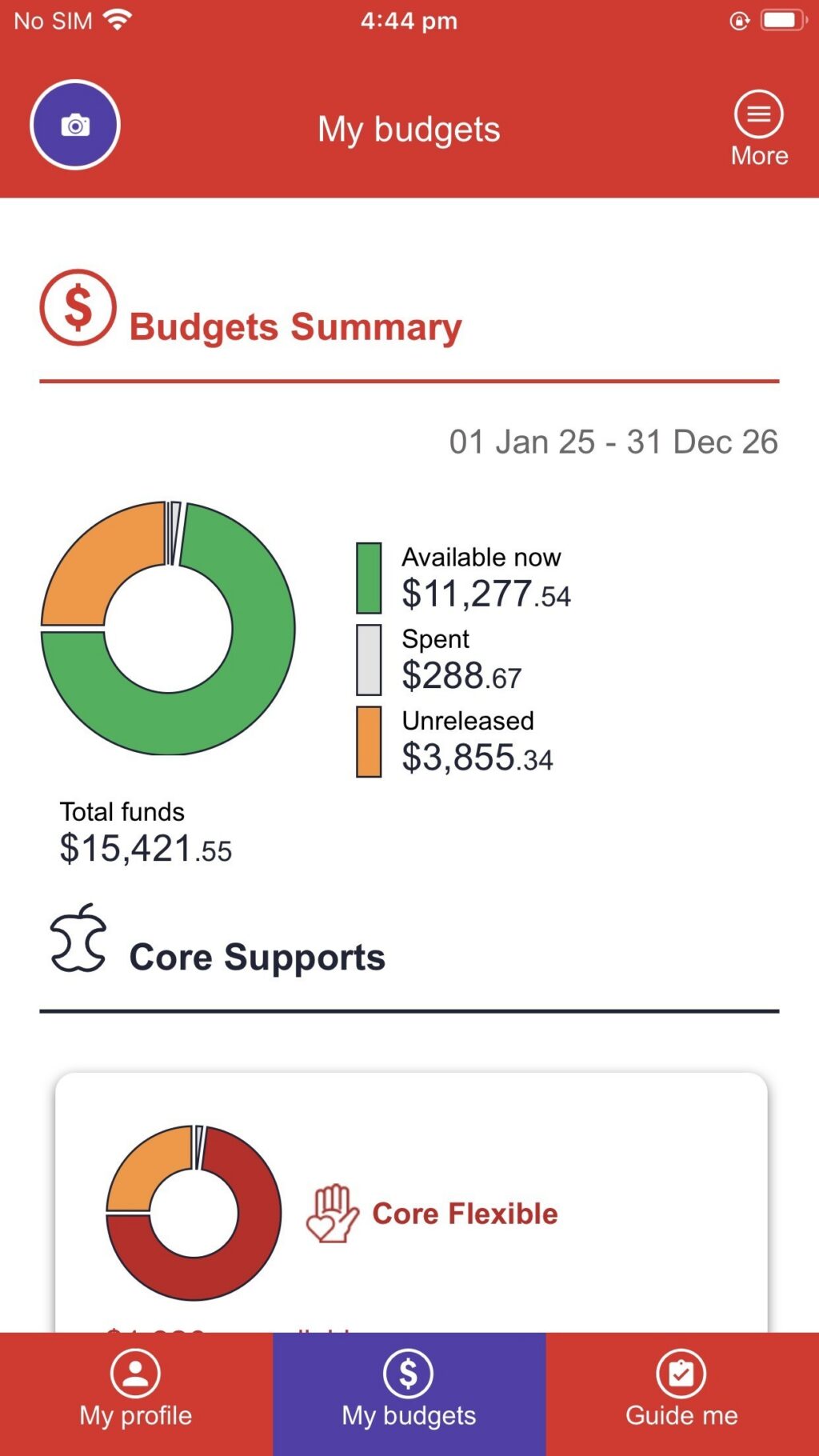
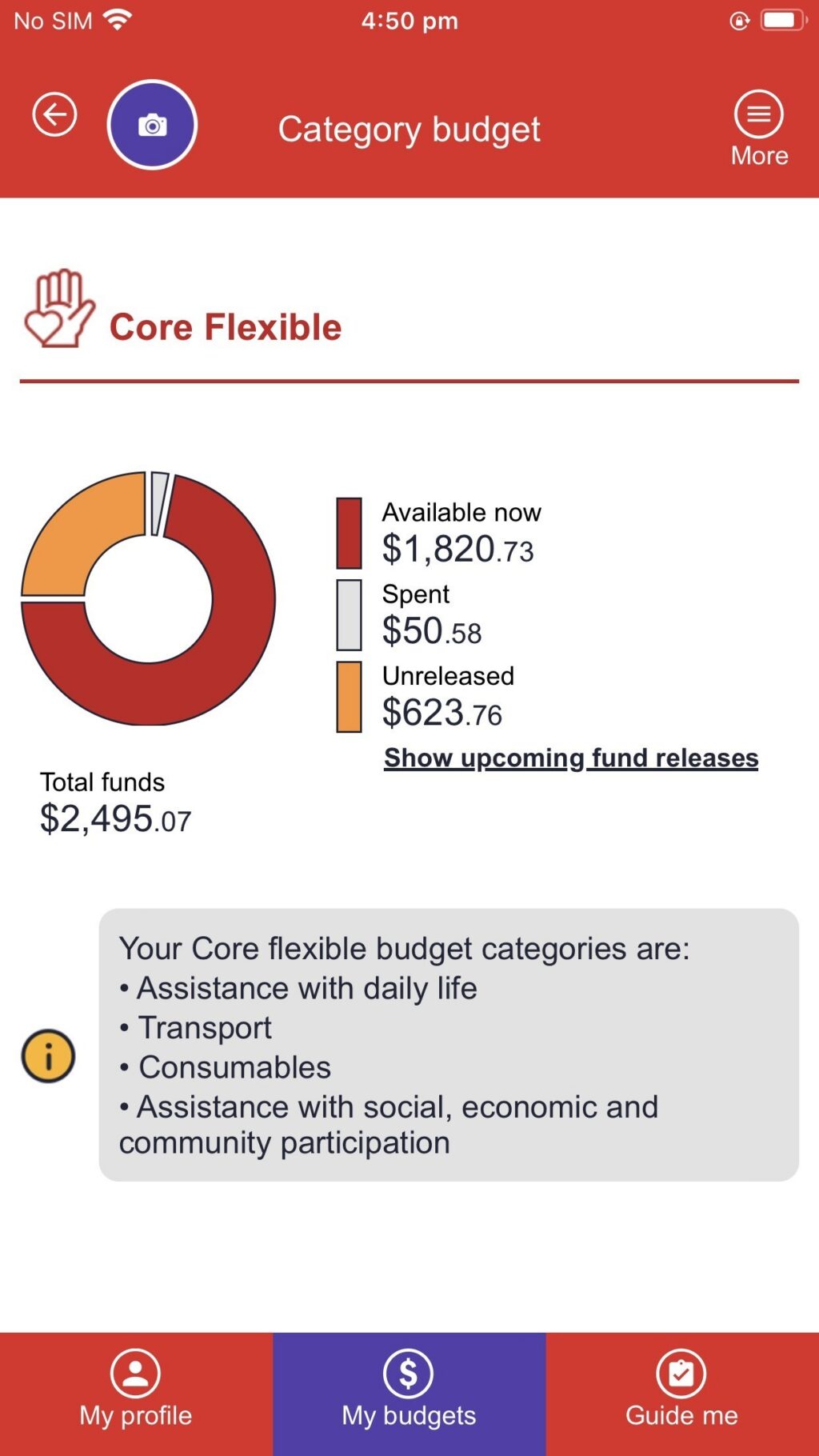
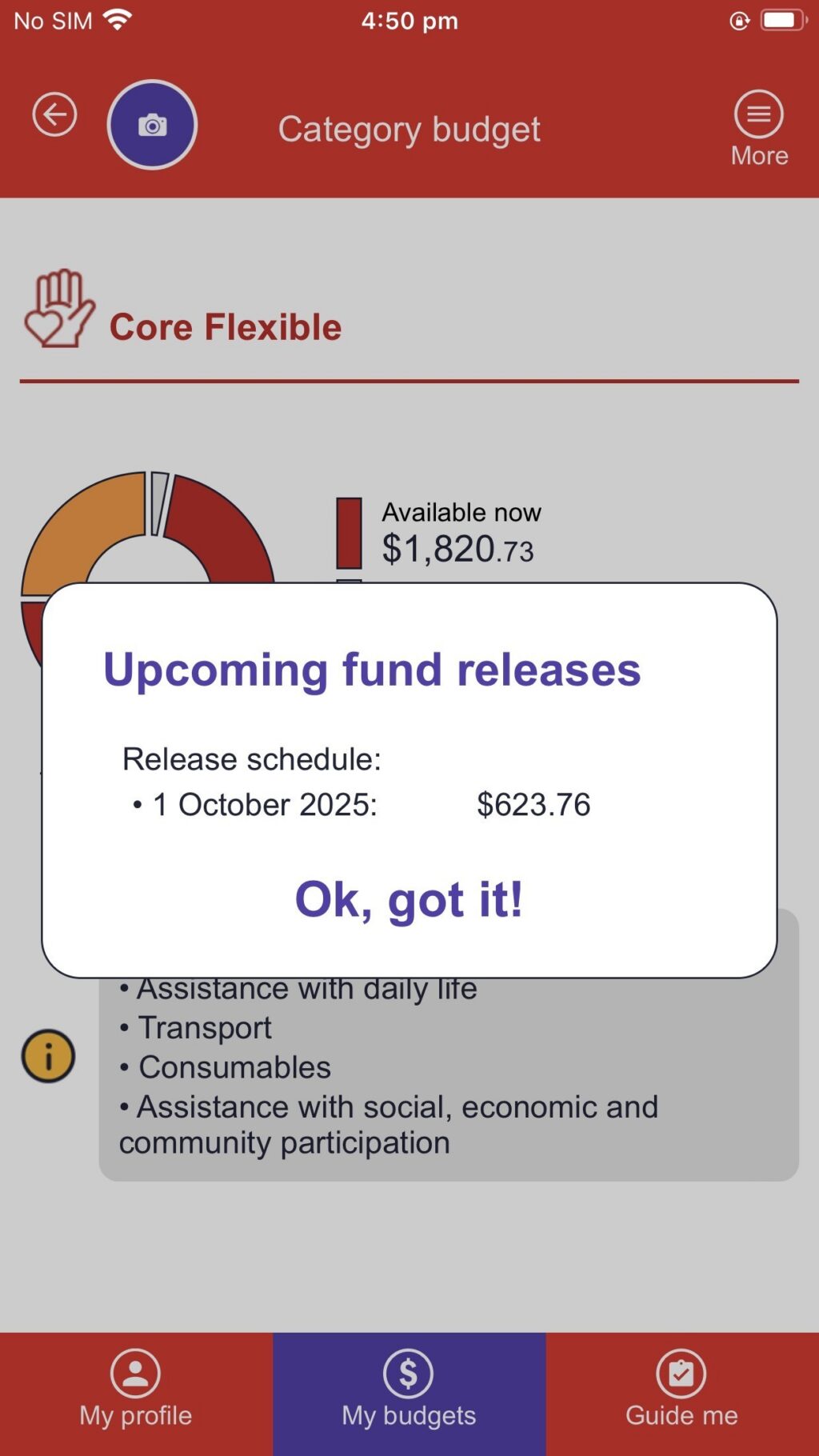
Below is an example of how your Core supports budgets appear in the Leap in! app if you’re on a PACE plan.
My budgets summary. View your total funds, available balance, spending and any funding scheduled for future release.
Category budget. Open a budget, such as Core Flexible, to see your available funds, spending, unreleased funding and the budget categories you can use.
Upcoming fund releases. Select ‘Show upcoming fund releases’ to view the amount and date of your next scheduled funding release.
Good to know. The Leap in! app only displays budgets that Leap in! manages. If you have self-managed or NDIA-managed Core supports, these won’t show up in the app.
How do Core supports differ from Capacity Building supports?
Core supports and Capacity Building supports both help you build independence, but they work differently.
Core supports funding pays for day-to-day help. For example, you might use Assistance with Daily Life funding for a support worker to help you with everyday tasks, such as showering or cooking.
Capacity Building supports sit in a separate budget and pay for things like therapy and building new skills, rather than ongoing help. Improved Daily Living is one example – it might fund an occupational therapist to help you develop your task management skills.
If your goal is to learn to do something for yourself, rather than get ongoing help with it, Capacity Building may be the better fit.
5 tips for making the most of your Core supports funding.
Your Core supports funding is usually released every three months. If you’re unsure how that funding might spread over the period, look at your goals and the supports required to achieve them. For example, if a goal requires a support worker, divide your allocated funding by the cost per hour to see how many hours you have available over the three months.
If you also have Capacity Building funding, it’s worth weighing up which budget fits your goal best before you book a support. See ‘How do Core supports differ from Capacity Building supports?’ above.
If you’re in doubt about what the NDIS will and won’t fund, read our article ‘What will the NDIS pay for?’ before you buy.
Moving funding between flexible budgets can help in the short term, but keep in mind it’s one shared budget, so the more you use in one area, the less there is for another.
If you’re using Core supports to work towards a specific goal, keep a note of what’s helped, so you’ve got something concrete to bring to your next plan reassessment meeting. The Leap in! app has a dedicated section for setting and managing goals, which can make this easier.
Good to know. If you’re on a legacy NDIS Plan, you may be able to use Core supports funding for minor repairs to assistive technology, such as a wheelchair or other assistive devices you rely on for essential mobility or safety. If you’re on a PACE plan, this is usually claimed under Capital – Assistive Technology Maintenance, Repair and Rental instead.
Good to know. You may be able to claim excluded items where they’ve been approved as a Replacement support. Read ‘NDIS replacement supports: What they are and how they work.’
We can help.
Leap in! helps you understand the supports you can buy and how to get the most from your NDIS funding.
The Leap in! app also has a dedicated section for setting and managing goals, which will make preparing for plan and plan reassessment meetings easier.
Call us on 1300 05 78 78, email [email protected] or sign up to Leap in! plan management today.
Updated 09 April 2025, 24 January 2023, 21 January 2024, 21 July 2026.